
What is an ice volcano?
Ice volcanoes, also called cryovolcanoes, are formations that have eruptions similar to hot lava volcanoes on Earth but with extremely cold, icy material being spewed out from deep inside. It is an aqueous mixture, rather than molten rock. Simply, it is a cold volcano.
How are they formed?
The action that causes the eruption is comparable to hot volcanoes on Earth. Two ingredients are required for cryovolcanism: a liquid under the surface that can become buoyant and a heat in the interior. The heat source in the interior warms the cold environment enough to enable some of the slushy ice or other materials exploding through an opening in the surface.
Where are they found?
Enceladus
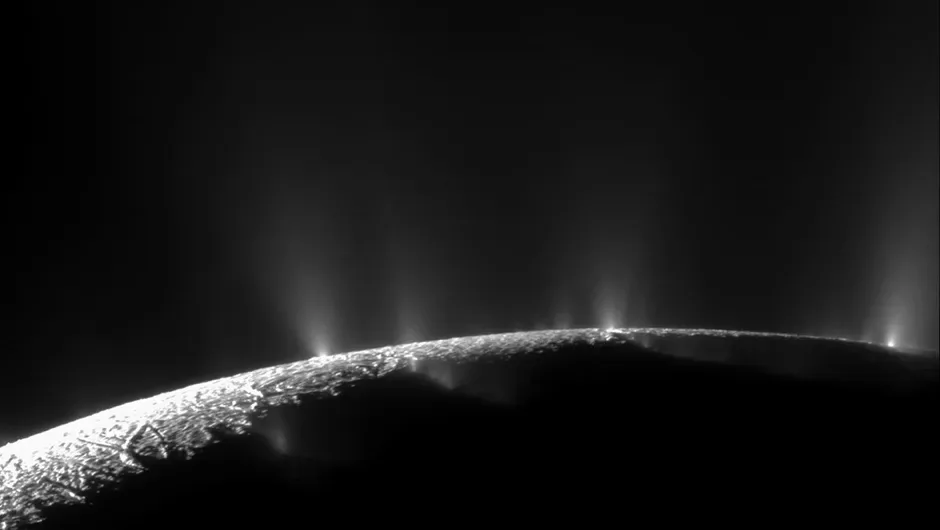
The best examples of ice volcanoes have been discovered on Enceladus, an icy moon of Saturn.
In 2005, NASA’s Cassini spacecraft flew by Enceladus, it discovered at least 20 icy plumes spewing a mixture of ice particles, water vapor, and other materials into space. These cryovolcanoes on Enceladus are very different from terrestrial volcanoes. The icy jets are erupting from long fissures known as ‘tiger stripes’ around Enceladus South Pole. See my blog for Mission Astro about Enceladus for more info about this fascinating moon and it’s ice volcanoes.
Triton
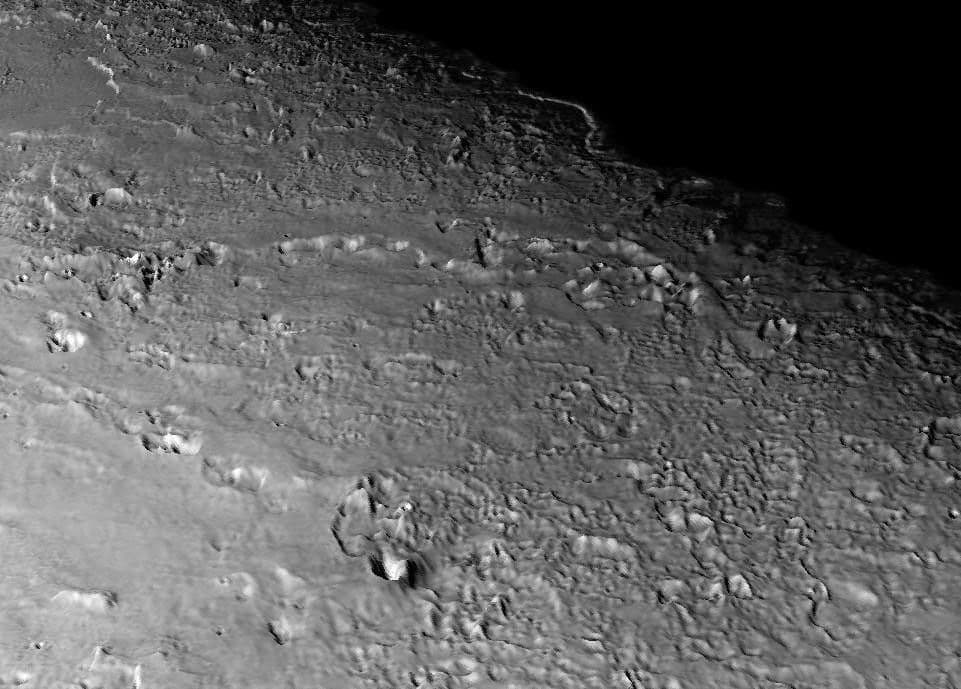
Triton, the largest of Neptune’s 16 moons, shows evidence of past cryovolcanism. NASA’s Voyager 2 spacecraft observed that Triton’s surface is composed of smooth plains, mounds, and rock pits. Scientists predict that these were at least partly created by cryovolcano’s icy flows.
Titan
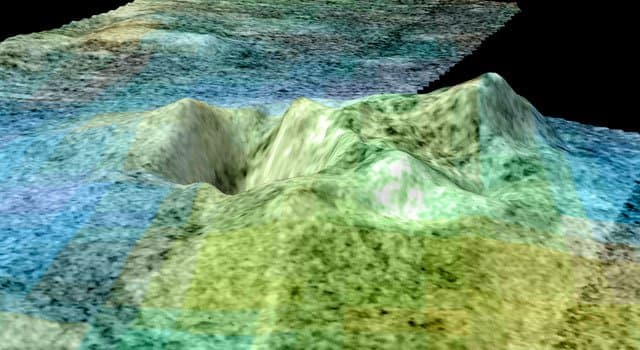
Titan, the largest of 274 known moons orbiting Saturn, has an area known as Sotra Facula, which looks volcanic. It has a mountain more than 1,000 meters tall, a crater next to it like a pit and finger-like flows. Our best interpretation is that it’s a cryovolcanic region. The problem with this theory is that currency scientists have seen no evidence of significant heat on Titan, which they believe is needed for cryovolcanism.
Ceres
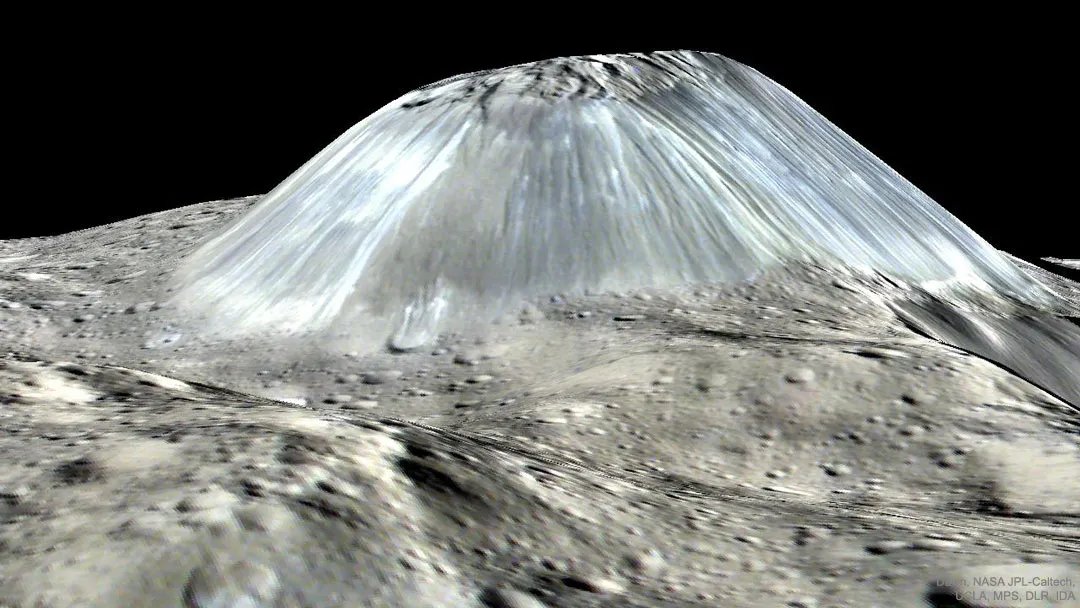
In 2015, NASA’s Dawn spacecraft discovered a 2.5-mile-high dome-shaped cryovolcano on the dwarf planet Ceres, which they named Ahuna Mons. Ceres is the largest (approx. 585 miles diameter) member of the asteroid belt located between Mars and Jupiter. Scientists predict that Ahuna Mons is around 240 million years old. It is the only prominent ice volcano discovered on Ceres. This seems strange, if the interior of Ceres is warm enough to form a cryovolcano, then there should be many of them. More recently, scientists have solved this puzzle and discovered 22 ancient ice volcanoes once dotted the surface. These range in size from 10 to 53.4 miles wide and 0.7 to 2.7 miles high. Scientists think these cryovolcanoes appeared on Ceres on average every million years, in the past billion years.
Conclusion
- Ice volcanoes, or cryovolcanoes are eruptions spewing out icy material from deep inside.
- They require two ingredients: an internal heat source and liquid under the surface.
- They are found on many moons and dwarf planets in our Solar System, Enceladus has some of the best cryovolcanoes.
Fun Facts about Ice Volcanoes
- The material spewed from a cryovolcano on Saturn’s moon Enceladus, would have an extremely cold temperature of -3 C to -116 C.
- Ice volcanoes can help us search for alien life. When they erupt they spray out material from the liquid inner layers, giving us an opportunity to study the interiors without needing to dig down.
Written by Dr Heather Campbell for Just Good Science Ltd.
References
- https://education.nationalgeographic.org/resource/cold-explosion/
- https://www.jpl.nasa.gov/news/cassini-spots-potential-ice-volcano-on-saturn-moon/
- https://www.skyatnightmagazine.com/space-science/cryovolcanism-in-the-solar-system
- https://science.nasa.gov/resource/tritons-volcanic-plains/
- https://www.newscientist.com/article/dn19874-giant-ice-volcano-may-have-been-found-on-titan/